Showing posts with label Investments. Show all posts

Monday, June 1, 2015

Faith-based investing in the Philippines

Photo Credits
Have you heard about this concept of investing?

It may be new for some people but it has existed in the past few decades in other countries. For some it is a form of religious-based investing using the principles and teachings according to one’s belief and denomination. It is somehow helpful in providing spiritual guidance on one’s financial growth although churches or religions are nonprofit organizations and they do not issue stocks or shares.  In the Philippines, there are no religious-based index funds or financial products available in the market. However, first- world countries such as the United States, Europe, Japan, Australia, the Middle East and our Asean neighbors like Malaysia and Indonesia have religious-based investment products based on Koran do exist in great numbers and people of different religious denomination invest in it.

Monday, April 14, 2014

Teaching them Young

Photo Credits

A month ago, the Department of Education and Bangko Sentral ng Pilipinas through their joint program, Guro ng Pag-Asa, awarded four public elementary-school teachers in the country in recognition of their effort at instilling the youth with the basics of personal finance and entrepreneurship under this program. It was also good to hear that they were given cash incentives for these effort, as well. 

Personal finance has come a long way in the past decade with information and ideas on investing and handling personal finance and money management. The recent development excites in that they are teaching the basics in public elementary schools around the country. But back in the days, there was not much information on personal finance and it was a concept I had a few years ago.

Friday, April 4, 2014

PSE EDGE Mobile Application now available!

A few months ago, The Philippine Stock Exchange launched their newest page the PSE EDGE (The Philippine Stock Exchange Electronic Disclosure Generation Technology). The PSE EDGE purpose is that all listed company disclosures and announcements will listed in this page and no longer be updated in the PSE Main website. 

Sunday, December 22, 2013

PERSONAL FINANCE 102: WHERE TO PUT YOUR MONEY


Courtesy of Freedigitalphotos.net
The economy is turning good and the Philippines is still on the investment radar of most international companies and venture capitalist. With this in place, local businesses and small investors are also joining up the bandwagon. Most folks are enjoying their profit in the recent Philippine Stock Exchange boom and it is hitting at 7000 mark last August of this year. 

Although, our government forecast has lowered it to 6.5 - 7% growth on Gross Domestic Product (GDP) with previous forecast of 7.3% for the full year by National Economic Development Authority (NEDA) brought about by the recent natural disasters and uneventful situations. 

People are asking me a lot of questions on where to invest their hard earned money this year and beyond? How much to invest? How much can recover and get their return of income (ROI)?  For me it is an unending process of teaching and advising on where to invest. It depends on their objectives or personal goals in life, their risk appetite and portfolio of investments and financial instruments they intend to create with. 

As a registered financial planner, I give them these advices and what options or alternatives they could give them better decisions with a short period to a long term type of investments available and also give the pros and cons of these types of investments. In the end, these would be beneficial for both us client and financial planner with less compromise when building a client’s portfolio.

Tuesday, January 29, 2013

13 WAYS TO JUMPSTART YOUR PERSONAL FINANCE THIS 2013.

By: Benedict F. Baluyut, RMT, REB, RFP

Holidays are over and we have moved forward to this year with high hopes and positive outlook. The past year has shared a lot of events from positive economic reports, increase business activities, there have been negative news from disasters and catastrophes that happened either natural or manmade during the latter part of 2012 in our country including the rumored Doomsday Prophecies of December 22, 2012 according to Ancient Mayan Calendar prediction which made world headlines a few days before the holiday season.

The spending during the past season had piled up and it did does not justify the expenses we incurred during the festive season for our friends, loved ones and colleagues so we better shape up or ship out in our finances.
Many superstitious people believe that the number 13 is an unlucky number but there is no reasonable explanation why we should have phobia on this because it is just a number? Still the destiny still rest in our hands.
This 2013 there are thirteen 13 ways to help uplift your spirits that could serve the purpose controlling the cash flow, let me share them to you.

Saturday, December 1, 2012

Still Have No Money? : A Short Overview of Personal Finance.


A few weeks ago, I was browsing this popular Filipino website and forum which is full of anonymous people from all walk of life sharing their thoughts and insights in this social network. In my curiosity, I checked the personal finance thread that is full of different credit card applications topics, how to get loans etc. but not much on financial literacy topics such as business or entrepreneurship, proper money management thread in which I am a bit saddened. 

There is one particular wherein a guy in his 30s has a dilemma on what is happening with his current personal finance.  The thread starter has zero (0) savings, no investments and may have little or no knowledge of handling money at all as I presume. He has been asking and receiving advices from people or strangers and I eventually read their posts of these anonymous people who are actively discussing that thread on how to properly money management and finances wherein they have given their insights about the topic which I considered somehow helpful and I participated and engaged in the discussion and expressed my opinions on that thread just to help gentleman who needs the advice.
There are factors that an average Juan or Pedro would not know. Let get the facts straight on what is happening on every day Filipinos the following are outlined below:


Wednesday, July 21, 2010

Retail Treasury Bills (RTBs) at Auction on July 27, 2010

The Bureau of Treasury will soon be offering to the public Retail Treasury Bonds (RTBs). Tentative offering/auction date is scheduled on July 27, 2010. Indicative rates and terms are reflected in the attached Offer Letter.

Key features of Retail Treasury Bonds:

* earns fixed interest rate
* interest paid every 3 months during the term of the bond
* placement targeted at retail and institutional investors
* direct, unconditional obligation of the National Government

Indicative Maturity Date:
5 year RTBs – August 5, 2015
7 year RTBs – August 5, 2017
10 year RTBs – August 5, 2020

Minimum Investment:
The Retail Treasury Bonds shall be issued in scripless form and will be sold during the public offer period in minimum denominations of P5,000.00 and integral multiples thereof.

Indicative Rates:
5 years – 6.1000% – 6.2575%
7 years – 7.1000% – 7.2296%
10 years – 7.4000% – 7.5937%

Taxation:
Interest Income is subject to 20% withholding tax except if investor has a tax exempt status where, interest will not be subject to the 20% withholding tax

Indicative Auction Date: July 27, 2010

Related Articles and posts:

Government Securities: Retail Treasury Bonds
MONEYVANTAGE: Getting a Mutual Fund

Copyright 2009 - 2010. PinoyMoneyVantage| Personal Finance Help Philippines

Saturday, June 5, 2010

Personal Investments:The Pros and Cons


Do you want to know the strengths and weaknesses of your investments?

As an investor, you should learn first the different investment risk even if the gains are very high for these type of investments in a volatile market. An investor should make some assessments regarding his risk profile and manage it as well without being emotional if it loses its value. Should a planner take in order for his / her client determining his / her personal investment capacity plus the risk he can take. That is a question. It was a totally fine lecture with insights and also the discussion of advantages and disadvantages of these types of investments.

When we were on the discussion regarding which investment is better. Real estate come to be first among the ranking. We did have this momentary contradiction with the securities representative participants and  us real estate brokers. I will not put the incident here on pitting against Real Estate against Stocks on which of the two is better but anyways, no investments are perfect and that is the beauty of it in diversifying your investments. Here are the summary below of the common investments that anyone can choose from:


Some of these lectures where adapted from Global Investors Center and First Metro Investment Corporation during Registered Financial Planners Institute - Technical Sessions and lectures on the RFP - Philippine Course. There are two pages on the Presentation.

REMEMBER THAT HIGHER GAINS MEANS HIGHER RISKS.


Related Articles and Blog post.

MONEYVANTAGE: Getting a Mutual Fund
Real Estate Investing in Tough Times - a short talk with Rex Mendoza
Budgeting Your Money: Most common mistakes people make
MONEYVANTAGE: Bank Deposits and Personal Savings Accounts
San Miguel Brewery Report: My first stock trading investment
MONEYVANTAGE: The Property Sector
Government Securities: Retail Treasury Bonds


Copyright 2009 - 2010. PinoyMoneyVantage| Personal Finance Help Philippines

Sunday, February 21, 2010

MONEYVANTAGE: Getting a Mutual Fund

In the past several weeks, I came across with some old friends and peers from high school and even college and got to talk to them about investments wherein many ask what investments can they delve into. A lot people I ask haven't heard about mutual funds nor heard or have little knowledge of this investment instruments. So I am willing to share some of my knowledge and background on this and made some Frequently Asked Questions or FAQs for beginners who do not know about these golden eggs and what it can do for them in the long run. As a disclaimer, past performance of the mutual funds may vary from time to time and may not result in the expected future yield.

What are Mutual Funds? How do this work? What are these financial instruments anyways?


Mutual Funds are a type of investments that are pooled together from group of investors and are professionally managed by a portfolio manager. The seasoned manager on the other hand invests the funds' assets in different variety of investments such as stocks, bond or other investment securities or a combination of both stocks, bonds and securities.

Net Assest Values per shares (NAVPUs) represent the value of total equity, or it may be divided by the number of shares outstanding and thereby represent the net asset per value of investment.

Concept of the mutual funds are seen in the diagram below.


Types of Mutual Funds


There are three types of mutual funds available in the market and are offered by mutual fund companies in the Philippines namely:

1.) Stock or Equity Mutual Funds - which consists mainly on stock investments and are invested in listed and non-listed equity securities in Philippines companies and some are also invested on invested in international companies;

2.) Balanced Mutual Funds - are a mixture of stocks, bonds and money market. These are generally hybrid funds which are composed mostly of the two (stocks and bonds) and are widely invested on both;

3.) Bond Mutual Funds - are mainly invested in debt securities or treasury bonds issued by the government of the Philippines and also corporate bonds issued by major Philippine companies.

Returns and Risks

There are no guarantees of risks and safety margin in this type of investments, however. I put some summarized information regarding the three types of mutual funds.

Choosing your Mutual Funds

There are several mutual fund products out in the market to select from. However as I have said in the disclaimer, the past performance of this type investment may vary and depend on the market conditions and are not indicative of expected future returns.

Expenses, Fees and other charges


Thing to bear in mind before venturing into mutual funds.

There are several fees to remember on getting the mutual funds wherein they are the loads, Redemption fees, Transaction fees and 12b-1 wherein this may vary with different mutual fund products available. Just to give you the basics of mutual fund fees and expenses:

1. Sales Loads - is the commission that you pay when you buy shares in a mutual fund. Also known as a front-end load, this fee typically goes to the brokers that sell the fund's shares. Front-end loads reduce the amount of your investment

2. Redemption fees - A fee that some fund companies charge their shareholders when they sell or redeem their shares. Unlike a deferred sales load, a Redemption fee is paid to the fund-not to the broker-to defray fund cost associated with redemption

3. Management Fees - Paid out of the fund assets, management fees include payments to the investment adviser for portfolio management, any other management fees payable to the fund's investment adviser or its affiliates, and administrative fees payable to the investment adviser that are not included in other categories.

4. 12-1B fees - Covers the expense of providing information to shareholders about their investment through phone, mail and especially the internet as a major channel distribution for shareholders.

5. Other fees - This includes all expenses not subsumed under another category, including c
custodial expenses, legal and accounting expenses, transfer agent expenses, and other administrative expenses.

What else to Remember?

Mutual Funds can be held by the professional managers and company for two years maximum, however early pull out of your investments will have tax and redemption fees charged to your mutual fund account if you wish not to pursue it after a few months as an example or before the given redemption date.

Before buying, shop around first and ask for prospectus. Learn the past performances and how well they are managed by their appointed professional fund managers by asking some questions with the selling agent and also checking around information on their websites. As I have said earlier in the disclaimer, Past performance is not indicative of future results or yield of the mutual fund.

Remember, every decision you make are very crucial. Planning, learning and preparing are the next necessary steps of your Financial Planning stage in becoming a Financially independent person.

Happy Investing!


Copyright 2009 - 2010. PinoyMoneyVantage | Personal Finance Help Philippines

Wednesday, October 1, 2008

PESOS AND SENSE: Weather Proofing your Personal Finance

I would like to invite you on one of the upcoming events of the Registered Financial Planners - Philippines


Peso and Sense

As you know the days of financial literacy is still at its infancy in the Philippines and only a handful of people know where to invest and make their money work for them in passive income way. Current times, we are plagued with financial difficulties with the wrong mindset and perception on how money should be used and how money should work for us and not work for money, we need to save for our future especially on the transition days.

Most of the speakers are well known in mutual fund, investments, financial planning and business industries.

1. J. Randell Tiongson is a financial coach and educator. He is a member of the Registered Financial Planner Institute - Philippines (RFP) and have been in insurance industry in the early 90's to present. He is a also a columnist with Business Mirror, RFP Philippines and appeared on financial related shows as guest in ANC (ABS CBN News Channel). You can visit his site at www.income-tacts.com and www.rfp-philippines.com.

2. Efren LL. Cruz is a Banker, Financial Planner and author of such books as "Pwede Na! The Complete Pinoy Guide to Personal Finance" and “Pwede Na! The Complete Pinoy Guide to Retirement and Estate Planning”. He writes for Business Mirror, Income-Tacts, RFP Philippines. You can visit his www.income-tacts.com and www.rfp-philippines.com.

3. Francis Kong is a motivational speaker, entrepreneur and columnist for Philippines Star in the business section. He is the owner of Inspire Leadership Consultancy Inc. ,the company that brought The Millionaire Mind of T. Harv Eker to the Philippine shore. You can visit his site at www.businessmatters.org.

4. Chinkee Tan is a former actor who has become a lifestyle trainer, entrepreneur and motivational speaker. He wrote a book titled "Till Debt do us Part" - which tackles on getting out of debt, becoming financial free and many more. You can visit his site at www.chinkeetan.com.


Copyright 2008-2009 - PinoyMoneyVantage

Saturday, September 6, 2008

Ways of Creating Wealth Seminars for September 2008 (Part 2)

Philippine Stock Exchange (PSE) is very active in providing seminars on Stock Investments thanks to the aggressive marketing of the Marketing Education Department of PSE and also the cooperation of different securities companies who are eager to tap the local market with the information and dissemination drive about our local stock market to the general public.

List of the seminars from different securities or brokerage companies include Basic to Advance Stock Market Trading and Analysis, Strategic Investing and many more (see List from Market Education Events of Philippine Stock Exchange) in Adobe Acrobat 8.0.

Other information for the said event and market orientation you can course to Capital Markets Development Division, PSE c/o Ms. Agnes Ignacio at (02) 688-7534 at PSE Tektite Building, Ortigas Center, Pasig City.

Sometimes the seminars maybe cost you dearly but a the long term investment of gaining knowledge and insight of passive income on financial instrument is PRICELESS!

Copyright 2008-2009 - PinoyMoneyVantage

Ways of Creating Wealth Seminars for September 2008

The Philippine Stock Exchange (PSE) recently posted articles in the web regarding Filipinos know how in the stock market and it seems only 1% invest of the population knows the passive-income potential of stock trading with their hard earned cash on this type of investment. The Philippine Stock Exchange is totally committed in delivering and providing awareness and education through this type of seminar for the general public in order to uplift not only the financial literacy of our countrymen as well as influence the movement of our Philippine economy and our businesses.


The Philippine Stock Exchange, Inc. and the University of Santo Tomas - College of Commerce Alumni Foundation, Inc. and its Young Alumni Achievers Council invite everyone to THE STOCK MARKET SIMPLIFIED: Walk your way to creating wealth.


SEMINAR TOPICS include:
Basics of Stock Market Investing
Personal Investment Strategy
Technical Analysis

Date and Venue
September 18, 2008
6:00 PM to 9:OO PM
PSE Tektite Trading Floor
2/F PSE Centre, Exchange Road
Ortigas Center, Pasig City

SEMINAR FEE
Php 500.00*
*inclusive of food and materials

For inquiries and registration, contact the following:
PSE Market Educ. Dept.:
Mr. Mark Valino
688-7539/688-7534
mavalino@pse.com.ph
www.pse.com.ph

UST COCAFI:
Ms. Leila Pulintan
786-1611 loc. 8374
ustcocafi@yahoo.com


Copyright 2008-2009 - PinoyMoneyVantage

Thursday, August 21, 2008

Real Estate Investing in Tough Times - a short talk with Rex Mendoza

August 6, We went to Manila on a business trip with my mom and younger sister (an apprentice and is learning the ropes of real estate). She recently finished her studies and just arrived fresh from the U.S. after a 3 week vacation mixed with business and pleasure. I was able to join them on the 2nd General Brokers Assembly for the second quarter of Alveo Land Corp., An Ayala Land company, which was formerly known as Community Innovations, Inc or CII for short. We were invited by one of the Brokers network coordinator the other day and the venue will take place at Bonifacio High Street, Bonifacio Global City, Taguig.

Alveo Land Corp (formerly Community Innovation, Inc.) was a young upstart company of Ayala Land Inc. (ALI) back in the early 2000 and has been in the forefront on the mixed residential developments ranging from horizontal to vertical projects wherein one of their top selling properties are Two Serendra in Bonifacio Global City, The Columns in Makati CDB just to name a few of their projects has achieved P 60 Billion pesos through its combined sales of their project in the whole Philippines with achieving a first quarter profit of % by Ayala Land Inc as reported by Mr. Robert Lao, deputy head of sales of Alveo Land Corp.

Mr. Dan Abando, president of Ayala Land Inc. together with Mr. Rex Mendoza, Senior Vice President of Ayala Land Inc. were present on the meeting together with the movers and shakers of the company, their accredited real estate brokers and their respective companies that are business partners with the Ayala Land. The top 10 brokers were presented and given awards and gifts for their support with Ayala's vision of developing the landscape and venturing into real estate which gave them lots of opportunities.

Mr. Rex Mendoza gave a small talk on Real Estate Investing in Tough Times in which he gave some details to help the sales people achieve their goals of selling to customers on bearish market and boosting sales of their properties. "The people are capable of buying anything but they are afraid of uncertainties lying ahead with dark clouds" as what Mr. Mendoza said. You see, customers are on a "wait and see effect" of the economy.


Monthly Peso per US $ Rate (January 1997 - June 2008)
LATEST: P 44.281 /US$ (June 2008)
HIGH: P 56.341/US$ (October 2004)
LOW: P 24.2648/US$ (December 1994)


Interbank Call Loan Rate
(January 1991 to June 2008)
Latest: 5.27 % (June 2008)
High: 21.1 % (January 1998)
Low: 6.9 % (July 2003)


Sources: Bangko Sentral ng Pilipinas


91-day T-Bill Rates (Updated 18 June 2008)
Latest: 3.67 % (January 2008)
High: 15.8 % (November 2000)
Low: 4.4 % (May 2002)

Mr. Mendoza recently showed some slide presentations adapted from Anton Periquet's presentations to Ayala's top brass a few weeks ago (Anton Periquet is a Deutsche Regis Partners Country Strategist). Just citing an example from last year, A lot of people in 2007 doubled their net worth overnight upon investing in stock market, mutual funds and others during the bull run of early 2007 but somehow upon reaching the late 2007 to the early 2008 a lot of the same people who invested were left with one half to one third of their net worth to losing streak. In 2007, people are thinking that they are rich because of their purchasing power but at present times people are belt tightening or afraid to invest, he asked us if the "Good Times are Over?".

People tend to ask the same old question of What now?, What do next? So people backtrack and not engage again meaning market needs excuses for movement and ask for stimulus on which inflexion point occur. The Philippine Stock Exchange Index is signalling another economic inflexion point. Mr. Mendoza reiterated that history repeats itself setting an example of 1997 Asian Financial Crisis (or Asian Flu of 1997) wherein Asian tiger economies like Japan, Singapore, Thailand, Philippines and other countries where hit hard but manage to survive the tough times and make a rebound in the process. He also pointed the psychological problem of the investor on How Long this problem will stay? Wherein there are two pre-requisites that should make the world economy stabilize on which 1.) Global Risk Appetite Normalize; 2.) Domestic Trigger Surfaces.

Along the meeting, he discussed the Virtous Cycle Unwinds that affected the world wherein there were two shocks experienced globally in late 2007 to present times. First of all is the U.S. SUBPRIME CRISIS brought about by CREDIT CRUNCH which was brought about by bad practice of lending and financing wherein they lent their money to those with poor credit (see through Investopedia). The second is OIL, in the past few months there have rising fuel prices but somehow a few days ago, the oil market and trading have recently decrease to US$ 115 per barrel and I am hoping it will go down sharply. The two shocks affected our real estate buyers from abroad specifically the Filipino-Americans who were our main investors but here in the Philippines and other overseas Filipinos from other parts of the world are not affected by the U.S. Subprime Crisis because our local banks are asking for primary collaterals (land titles, bank certificates, stock certificates etc) before issuing and approving a client a loan (very strict rules) so it is a different story from what is happening in the U.S. wherein the lenders can lend you money as long you are breathing with no collateral before the housing bubble burst.

There is a growing consciousness among the public in investing in real estate to hedge against inflation wherein a property is still the best option in long terms with capital appreciation. Right now mortgage rates from banks remains low with major banks competing in giving the lowest rates to potential customers, Peso - Dollar Exchange Rate is still stable and positive economic outlook in 2009 and Filipinos as most Asians regard property as a primary investments.

There maybe crisis in these rough times but some people see opportunities in times ahead.

"THERE IS NO FUTURE IN SHORT TERM".


Copyright 2008-2009 - PinoyMoneyVantage

Wednesday, August 13, 2008

San Miguel Brewery Report: My first stock trading investment


A few months after my initial investment with this company. San Miguel Corporation recently released their 1st Quarter sales report (see below). I am much surprised and pleased to see that from PhP 8.00 per share of stocks that I bought Last May 2008 have dramatically jumped to PhP 9.30 per share so my 1000 shares from San Miguel Brewery went up with estimated net value PhP 9,100.00 to PhP 9,300.00, thanks to their boosts of revenues from beer and food operations. Prior to hitting the PhP 9.00, before it was still at PhP 8.40 - PhP 8.50 per share on the end of July. The April to early July were stock trading was limited due to fears of high oil prices and fears of the investors in loosing more their money but somehow San Miguel Brewery pulled on its initial public offering (IPO) on its debut at PhP 8.50 per share but fell sharply on the following weeks to PhP 8.10 - PhP 8.30 per share. (see Charts for San Miguel Brewery)

Somehow, the world stock market rallied when prices of oil have dropped dramatically to US$ 113 per barrel with confidence from worldwide investor of this positive news which gave a stimulus in market movements in the past weeks.

The article below was taken in the San Miguel Corporations' website.

San Miguel Brewery Revenues for First Semester up 9%

7/24/2008
San Miguel Brewery Inc. (SMB), the brewery operations of San Miguel Corporation, today reported first semester 2008 net sales of P23.8 billion, 9% higher than last year’s P21.9 billion, directly attributable to a 7% increase in sales volumes.

Operating income grew 25% to P7.2 billion from P5.7 billion in the prior year period.

“Despite a more challenging economic environment and added pressure on the consumer’s disposable income, we’ve turned in very strong results. We continue to invest in brand building and are focusing on improving sales momentum and efficient execution across all distribution levels,” said Ramon S. Ang, president of SMB Inc. The Company’s marketing resources were focused on outlet-based promotions and on reinforcing flagship brand, San Miguel Pale Pilsen. Trade management efforts, including rationalization and training, are being implemented to streamline and maximize product distribution. SMB Inc. is also undertaking new programs to offer wider availability and ensure consumer satisfaction. To conserve financial resources, programs to reduce inventory and trade receivable levels were also implemented alongside other cost saving programs.


Thursday, July 24, 2008

Government Securities: Retail Treasury Bonds

Last week, the Bureau of Treasury has formally announced its offer for a 3 year and 5 year Retail Treasury Bonds which has a coupon price 8.5% interest for the 3 years RTBs while 9% for the 5 year RTBs.

Retails Treasury Bonds are direct and unconditional obligations of the national government which primarily caters to the retail market or the end-users. They are issued by the Bureau of Treasury (BTr). They are interest bearing and carry a term of more than one year and can be traded in the secondary market before maturity.

Retail Treasury Bonds are safe, liquid and offer attractive returns to investors.

Features:

Issuer : National government
Term : 3 and 5 years
Tax feature : Interest income subject to 20% final withholding tax
Type of income : Tax paid income
Rate : Fixed for the life of the RTBs
Coupon payment period : Payable quarterly in arrears
Interest computation : Simple interest/add-on
Manner of purchase : Auction or through secondary market

Retail Treasury Bonds are issued and sold at a price equal to be face value and are redeemed at maturity for the full face value of the instrument plus interest/coupon of the last period (www.mart.com.ph).

Copyright 2008-2009 - PinoyMoneyVantage

Friday, July 18, 2008

Budgeting Your Money: Most common mistakes people make


It's payday time. A lot of young professionals (yuppies) are on their trail to the nearest ATMs and they would sure look forward in a night out dinner with friends or do the usual night hops to bars and places of entertainment like a movies, shopping and others. After spending some on non-essential things they become guilty of losing their money in the end with debt from credit card companies and other IOUs with friends, relatives, your local loansharks even the legitimate lending companies around.

That's spells trouble alot for those who spend too much for nothing however only a few people know where they keep track of their weekly and monthly expenses in a regular basis which basically important in managing your finances in order not to overspend.

1. "I do not know where my money went" (Never Keep track of your spendings)
Solution: Track your spending and begin with a budget

A lot of people fear money management. This problem would definitely make a poor decision making and stop you from searching for that problem. It is better to face that fear and debt in order to get back to on track. It is better to track your budget by keeping your receipts and later track on your spendings and categorize in groups like for groceries, utilities, mortgage and emergency money and non-essentials.

Better to sit down, tally and categorize those expenses you incurred, a best example is to see your last month's worth of receipts including those that do not need receipt like buying some candy in a nearby sari-sari store counts as well. Keeping track of small and major expenses is highly recommended by putting it in a notebook.

Once you find extra cash, you can now save a portion and use the others for paying debts.

2. "I am maxed out with my Credit Card" (Credit Card debts rising).
Solution: Face on your creditors and negotiate

This fantastic plastic money is here to stay. We are faced with too much product advertisement of credit cards, with sales people littering around malls giving leaflets of credit card application and of course the cold calls they make during the early afternoons to mid-morning via their call center representatives. Some of our local big banks are offering credit card for free unless you are an account holder of their institution and having been banking with them for more than six months to a year. Back in my college days, lots of teenager can apply for a credit card through this major credit card firm and were in debt already in their young life.

Don't put yourself on situation that you hadn't paid up your credit card debt. Failing to pay your bills and ducking away from creditor's call can destroy your credit standing. Better to be straightforward than hiding yourself from them.

Contact your credit card companies - it is better to negotiate with your creditors tell them forward that you are unable to pay outright with money. Learn to haggle and tell them your lowest rates that can match with another credit card company. They sometimes accept a percentage of a full amount or help you set up a reasonable repayment.

Other things to remember on lessening your credit card debt:

3.) Do not take cash advances

Cash Advances - Instant cash indeed, they have the potency to make you get it but think a lot of time before receiving that money. Advances have sky-hight interest rates and service fees. In other word it is a expensive way to get cash. Better to slash those household expenses in order to prevent that short-term cash crisis.

4.) Don't miss payment dues

Credit Card companies pay a hefty fine on late payments, it is better to try paying online banking if you are beating the deadline. In short, being late on payments would definitely affect your credit score.

5.) Don't carry too much plastic on your wallet (too many credit cards would blow a hole in your pockets).

Having lots of credit cards is an easy way of piling those credit card debts. An instance, for example is a man who carry multiple credit cards wherein he pays the credit card A with credit card B. Better to control yourself on not misusing this tool.

It is better to limit your credit cards to two cards for easier money management. The first card is used for short-term purchases that you can pay-off in a month while the second card for major purchases.

6.) Don't make the minimum payments

This will stretch out your payments, with interest on hand, this will increase your overall cost on your purchase.

People think that "Credit Card is free money" but it is NOT. They do not know the concept of the credit card system, wherein you make a major purchase on that particular item through this credit card company and later pay it on before the due date or in a given time frame.

Save Smart, Spend Smart.

Copyright 2008-2009 - PinoyMoneyVantage

Sunday, June 15, 2008

MONEYVANTAGE: Bank Deposits and Personal Savings Accounts

What is the purpose of bank deposit savings? A lot of people ask questions on why save your money on a savings account?

Savings accounts are accounts maintained by retail financial institution that pay interest but can not be used directly as money (by, for example, writing cheque). These accounts let customers set aside a portion of their liquid assets while earning a monetary return (see Wikipedia). A savings account can be in passbook or in Automated Teller Machines (ATMs).

A lot of people underestimate the use of savings account in bank although it only earns about one percent (1%) prevailing rates in the Philippines. Still a savings account is useful in many financial aspects. Saving money may be placed in short term or long term goals still the purpose he/she must undertake in securing his/her future. An example of the uses of this investment tool are raising for a down payment in order to purchase a property (condominium or a house & lot) or an automobile, setting up capital for a future business venture, or can be used as emergency fund, used for transferring fund via mobile banking locally or abroad or a keeping your personal secret stash.

Opening a bank savings account is easy, the purpose of opening a savings account for a smart financial investor is to "contain or temporarily store" some of your money in a bank and at the same time it can be used as a financial statement in acquiring bank loans (housing, automobile and personal loans), buy some other financial investments offered by this financial institution that produce higher yields. An example of this is buying a retail treasury bond in government controlled banks like Development Bank of the Philippines and Land Bank of the Philippines wherein it requires an initial deposit of PhP 5,000 on your savings account before buying Retail Treasury Bonds worth PhP 100,000.

For a clearer view, let set an example:

Ramon is a 9 to 5 office worker, he receives a an average of PhP 14,000.00 a month. He is a novice investor and have average knowledge in investments thanks to his peers encouragement in reading financial planning books and attended some free financial literacy seminars. He saves a portion of his salary because his goal is for him to set aside money for emergency fund that is good for six months in case he lost his job (or get sick), set aside a downpayment for his equities on his planned purchase of a PAG-IBIG accredited development (house and lot package) in Cavite and at the same time save for an initial capital for a small time enterprise or business in the sides in by next year.

He maintains five savings account which he manages from different banks, he puts up his goals into action.

BANK
ABC Bank: saves money for Contingency or Emergency fund
XYZ Bank: saves money for a purchase of higher yielding investments (ex. stocks, mutual funds, Value Unit Linked Insurance, etc.)
LEVI Bank: saves money for initial capital of his small business.
EFG Bank: saves money down payment in acquiring a buying a house and lot with an Pag-Ibig accredited property developer in Cavite.
BBB Bank (ATM provided by his employer): Salary and personal expense fund.

When time and money matures they can eventually use the saved money in their specific goals or reinvest it with higher yielding vehicles like equities, mutual funds, money market bond funds, UITFs etc.


Copyright 2008-2009 - PinoyMoneyVantage

Thursday, March 27, 2008

MONEYVANTAGE: The Property Sector

It has become the best choice in investments for most people as a vehicle or income stream. Real Estate values appreciate for the past few years and started booming after 1997 Asian financial crisis was over in 2001 at that time when Asian countries have finally recovered. Year 2002, where most of the major developers and private contractors have started running their engines for the bull run up ahead as the Philippine economy is on a swing again.

Source: "Investing in Stock Market Today" (www.citiseconline.com)

Right now it is a Buyer's Market wherein the demand of real estate is high but somehow it is a little bit slowing down due to the U.S. financial crunch of what our North American-based Filipinos are experiencing right now yet it is favorable for our local young urban professionals, OFWs living in the European countries and elsewhere to invest in the Philippines because they are somehow not affected with the US$ dollars decline in value due to the fact their are using Euros as their currency plus the low interest rates from our local Philippine lenders and banks, flexible payment terms and schemes from the developers had also attracted favorably to the end-users.

According to Global Property Guide, House prices in the Philippines rose by 14.29% y-o-y to Q2 2007, up from 8.45% y-o-y to Q2 2006. Strong economic growth and the continued inflow of remittances from Overseas Filipino Workers have been fueling the housing market in the Philippines. Our total U.S. $ dollar reserves reach a whopping U.S.$ 34.8 Million dollars from its previous U.S.$ 8 Million dollars according to the reports of Bangko Sentral ng Pilipinas (BSP) as of this writing.

Somehow Filipinos put a great value in owning a property in order for them to secure in the long term on their retirement age here in the Philippines. Not only that our retired fellow Filipinos who are coming back but the majority of foreign expatriates and retirees coming here to study, do business or even live their transition ages in style. Prices of commodities are less expensive compared to theirs, cost of living is not that high with the value of money they are receiving from their pensions able to sustain and compensate them with excess cash on their hands, Climate in our country is tropical it is mostly sunny and rainy wherein most of these foreigners would like to frolic in the hot sun.

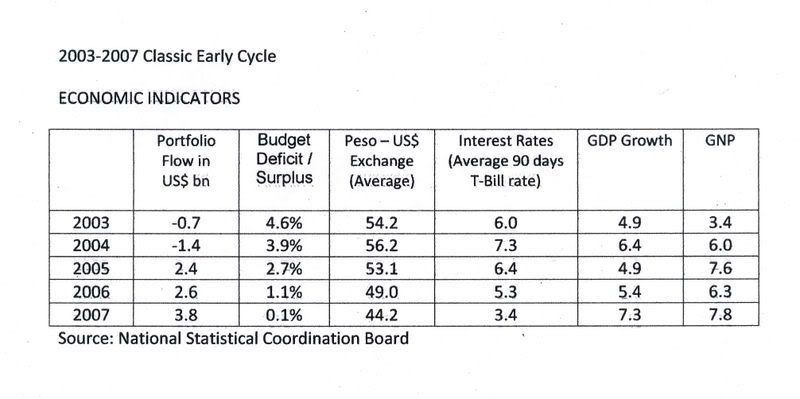
REAL ESTATE BOOM continues as seen on the Philippine Industry Growth Cycle which has becoming relevant for those who are engage in stock market. The propery sector is in the growing stage and would likewise pick up the pace in the future.

Copyright 2008-2009 - PinoyMoneyVantage